

7 Ways Interest Rates Affect the Stock Market
Advertisement
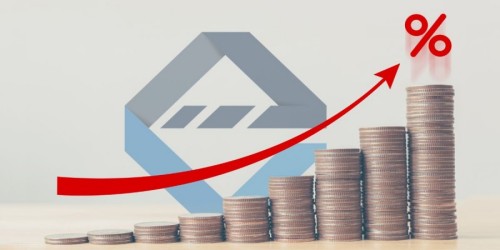
In the financial market, interest rates are an important tool for macroeconomic regulation, and their changes have far-reaching and complex impacts on the stock market. The adjustment of interest rates is not only directly related to the financing costs of enterprises and the investment returns of individuals, but also indirectly affects market sentiment, capital flows and the overall economic environment. The following are seven main ways that interest rates affect the stock market to help investors better understand market dynamics and make wise investment decisions.
1. Changes in financing costs
The rise and fall of interest rates directly affects the borrowing costs of enterprises. When the central bank raises the benchmark interest rate, the cost of bank loans and other debt financing rises accordingly, increasing the financial burden of enterprises. This may cause enterprises to reduce capital expenditures, postpone or cancel investment projects, and thus affect their profitability and future growth expectations. As a barometer of corporate value, the stock market is often under pressure and stock prices fall. On the contrary, a reduction in interest rates can reduce financing costs, encourage enterprises to increase investment, and be beneficial to the stock market.

2. Discount rate effect
When evaluating the value of a stock, investors use a discount rate to discount future cash flows to current value. The discount rate is usually associated with a risk-free interest rate (such as the yield on government bonds). When interest rates rise, the discount rate also increases, which reduces the present value of future cash flows and thus reduces the theoretical value of stocks. This will cause the overall stock market valuation to move downward and stock prices to be under pressure. Conversely, a decline in interest rates is conducive to improving stock valuations and attracting investors to the market.
3. Changes in investment preferences
Interest rate changes will also affect investors' risk preferences and asset allocation decisions. In an environment of rising interest rates, fixed-income assets (such as bonds) become more attractive because higher interest rates mean higher interest income. This may cause funds to flow from the stock market to the bond market, reducing the supply of funds in the stock market and putting pressure on stock prices. Conversely, when interest rates fall, bond yields fall, and investors may seek higher-yielding assets, such as stocks, which will drive the stock market up.
4. Expectations for the economic outlook
Interest rate adjustments often reflect the central bank's views on the economic outlook and regulatory intentions. For example, to stimulate economic growth, the central bank may cut interest rates, which is often seen as a signal that the economy may slow down and may cause market concerns in the short term, but in the long run, a low interest rate environment is conducive to boosting economic activity and has a positive impact on the stock market. On the contrary, an interest rate hike may indicate an overheated economy or rising inflationary pressures. Although it helps control inflation in the long run, it may suppress stock market performance in the short term.
5. Consumption and investment confidence
Interest rate changes will also affect consumer and corporate confidence. In a high interest rate environment, consumers may reduce consumption due to rising loan costs, and companies may postpone expansion plans due to increased investment costs. These will weaken economic growth momentum and have an adverse impact on the stock market. On the contrary, a low interest rate environment helps boost consumer and investment confidence, promote economic growth, and support the stock market.

6. Exchange rate fluctuations
Interest rate differences are one of the important factors affecting international capital flows. When a country's interest rate rises, it usually attracts foreign capital inflows and pushes up the exchange rate of its currency, which is beneficial to export-oriented companies (because products become cheaper in the international market), but may put cost pressure on import-oriented companies. Exchange rate changes indirectly affect the stock market by affecting corporate profits. In addition, exchange rate fluctuations may also trigger changes in market sentiment, further affecting stock market trends.
7. Market sentiment and expectations
Finally, interest rate changes will also indirectly affect the stock market by affecting market sentiment and investor expectations. Interest rate adjustments are often accompanied by the release of policy signals, which can quickly change investors' views on future economic trends and stock market performance. For example, an unexpected interest rate hike may trigger market panic and cause a sharp drop in the stock market in the short term; while an unexpected interest rate cut may stimulate market optimism and drive the stock market up.
In summary, the impact of interest rates on the stock market is multi-dimensional and multi-level, involving financing costs, valuations, investment preferences, economic prospects, consumer and investment confidence, exchange rate fluctuations, and market sentiment. Therefore, when investors pay attention to the stock market, they must pay close attention to interest rate changes and the policy intentions behind them, combine macroeconomic environment, corporate fundamentals and other factors, comprehensively judge market trends, and make rational investment decisions.
Advertisement
Advertisement
 1
1 1
1- Previous article
- Building a better future: a comprehensive look at retirement savings in the United States!
- Next article
- Artificial Intelligence Revolutionizing the Financial Sector
Advertisement
OTHER NEWS

The Financial Anatomy of a Successful Restaurant Operation
BY Little Grapes

When a Couple Buys a House Together, who is Better to Choose as the Primary Lender for the Loan?
BY Little Grapes

Strategies for Success in the Watch Industry
BY Little Grapes

What are the Cheapest car Insurance Companies?
BY Little Grapes
Evolution and Transformation: A Glimpse into the Modern Banking Industry
BY Little Grapes

Understanding Business Lines of Credit and Business Credit Cards.
BY Wendy
RECENT NEWS
-

Full analysis of the economic impact of the US tariffs on China: who is bearing the cost?
-

What should I do after a car accident?
-

Financial Trends 2025!
-

Artificial Intelligence Revolutionizing the Financial Sector
-
7 Ways Interest Rates Affect the Stock Market
-

Building a better future: a comprehensive look at retirement savings in the United States!