
Full analysis of the economic impact of the US tariffs on China: who is bearing the cost?
Since 2018, the U.S. has imposed several rounds of tariffs on Chinese exports, marking an unprecedented stage of tension in trade relations between the U.S. and China. 2024 and 2025, the U.S. is once again considering raising import tariffs on key Chinese goods (e.g., electric cars, batteries, chip manufacturing equipment, etc.). These measures are seen by the U.S. government as a tool to “curb China's manufacturing dominance” and “protect local industries,” but their economic effects go far beyond trade balancing.
In this paper, we will systematically analyze from multiple dimensions: What are the real impacts of the US tariffs on China on the domestic economy? Who is bearing the cost? And has it achieved its strategic objectives?
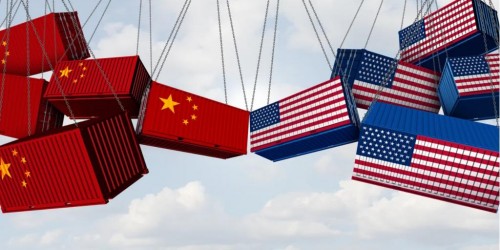
Background and Scale of US Tariffs on China
The main goal of the US tariff hikes is to force the Chinese government to make changes in intellectual property protection, market access, and subsidy policies. As early as 2018, the Trump administration imposed tariffs on more than $350 billion of Chinese goods based on the “301 investigation.” The Biden administration has continued and partially expanded this policy and plans to further increase tariffs to more than 60 percent on electric vehicles, green energy, and high-end chip equipment starting in 2024.
The tariffs cover everything from basic raw materials (e.g., steel, aluminum) to consumer goods (e.g., furniture, electronics, toys), and their impacts are deeply embedded in the U.S. economy at many levels.
Impact on U.S. Consumers: An Invisible “Stealth Tax”
While Chinese exporters are the target of the tariff increases, it is often U.S. consumers and businesses that bear the actual cost of the tariffs.
1. Higher commodity prices
According to the Peterson Institute for International Economics (PIIE), more than 90% of the tariff increases are passed on to U.S. importers and then to end consumers. Example:
Prices of washing machines rose by an average of about 12 percent after the tariffs were implemented;
Prices of children's toys, clothing, and other daily necessities have increased between 5% and 10%;
Prices of home appliances and electronic products have fluctuated dramatically, and the pressure on consumer spending has risen significantly.
Especially in low-income families, these products account for a greater proportion of daily consumption, so the tax increase has a clear “reverse redistribution” effect.
2. Increased inflationary pressure
In the late stages of the epidemic, the United States was already facing high inflation. Tariffs further pushed up the input prices of commodities, weakening the effectiveness of the Federal Reserve's anti-inflation policy. Research suggests that about 15-20 percent of the increase in U.S. commodity prices during 2021-2022 could be attributed to a combination of tariffs and supply chain disruptions.
Impact on U.S. Businesses: Rising Costs and Pressure to Reorganize Supply Chains
1. Manufacturing and Small and Medium-Sized Enterprises (SMEs) will bear the brunt of the impact
Many U.S. manufacturing firms rely heavily on China for components, raw materials, or intermediate products. Tariff increases directly raise the cost of imports, and firms are forced to suffer the dilemma of “squeezing margins” or “raising prices to be uncompetitive”. For example:
Automobile manufacturers need to purchase large quantities of batteries, chips and components from China;
Construction and energy equipment companies have difficulty in finding alternative sources with the same quality and price ratio in a short period of time.
Due to their weak bargaining power and single supply chain, SMEs are far weaker than large multinationals in coping with tariff shocks, and even face an existential crisis.
2. High cost of supply chain transfer
Some enterprises try to “de-Chinaization”, moving part of the production chain to Southeast Asia, Mexico and other places. However, the initial investment is high:
The initial investment is high, and the cost of factory construction and logistics system establishment is huge;
Insufficient industrial support, many countries in Southeast Asia lack a mature industrial chain network like China;
Labor quality, infrastructure, policy stability is also difficult to replace China.
Therefore, in the short term, large-scale supply chain transfer can not be fully realized, but increased business operation uncertainty and cost fluctuations.
Impact on the U.S. job market: manufacturing revival not as expected
One of the core objectives of the tariff increase is to “promote the return of the manufacturing industry and create jobs”, but the actual effect is not obvious.
1. Limited job creation in manufacturing
Although some industries, such as metal smelting, furniture assembly and other localized return, but from the macro data, the number of U.S. manufacturing employment has not changed much. According to the Economic Policy Institute (EPI), net employment growth in the manufacturing sector has been less than 2% since 2018, while employment growth in the service sector, logistics, and other areas has been much higher over the same period.
2 Net employment may be negative
While tariffs have created jobs in individual sectors, it has also led to more job losses:
Retail, logistics, and import trade sectors were hit;
Businesses expanding and hiring less as costs rise;
Decreased willingness of foreign investment, reducing job opportunities.
Overall, the “net effect” of tariffs on the U.S. job market is close to neutral or even negative.
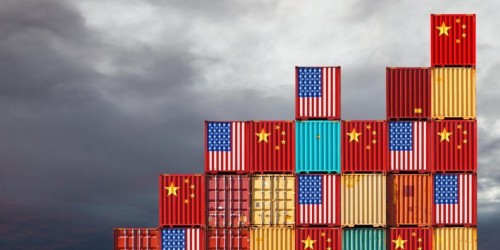
Impact on U.S.-China trade structure and bilateral relations
1. Declining Trade Volume but No Significant Improvement in Deficit
U.S.-China bilateral trade declines by about 12 percent in 2023, but the U.S. trade deficit with China narrows only slightly. This reflects:
U.S. products are not competitive enough and export growth is limited;
U.S. import substitution has not been fully realized, and some products maintain dependence on Chinese goods through “bypass imports” (e.g., imports from Vietnam of goods originally produced in China).
2. Rising risk of strategic decoupling
The tariff war has accelerated the “strategic decoupling” of trade and economic ties between the US and China, as the US tries to build an economic model with “low dependence on China”. But this process has led to:
Declining political trust between the two sides;
Restricted exchange of technology and talent;
More geopolitical uncertainty for businesses.
In the long run, a full-blown economic confrontation between the US and China would pose a systemic risk to global economic stability.
Indirect impact on financial markets and investment confidence
1. Increased market volatility
Every tariff policy adjustment triggers significant market volatility, especially when uncertainty about U.S.-China negotiations is high. The stock market is highly sensitive to tariff news, especially technology and manufacturing stocks.
2. Cautious foreign investment
International capital is increasingly skeptical about the predictability of U.S. economic policy, and some foreign investors are taking a wait-and-see approach or turning to markets in Europe and Southeast Asia. In addition, the suppression of Chinese companies may also lead to “countermeasures”, further affecting the overseas profits of U.S. companies and market access.
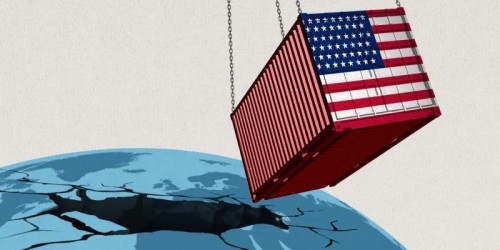
Medium- and Long-Term Impacts and Policy Rethinking
Tariffs were initially imposed to “protect” and “pressure”, but looking back on more than five years of practice, the U.S. has achieved limited results strategically and incurred significant economic costs.
1. Industrial chain reshaping requires long-term planning
Supply chain restructuring should not rely on a single policy impact, and requires the cooperation of industry, talent and infrastructure. Rash “decoupling” may weaken the competitiveness of U.S. global industry.
2. “High tariff policy” is not a long-term solution.
Long-term reliance on tariffs is likely to lead to suppressed domestic demand, international competitiveness decline, and can not solve the fundamental scientific and technological competition, lack of innovation and other issues.
3. Multilateral cooperation may be more effective
Compared with unilateral sanctions, the United States through the WTO, Europe and other developed economies, the joint challenge to China's industrial policy, may be more powerful and stable.
The U.S. policy of imposing tariffs on China is a “tough” stance in the short term, but the long-term economic costs are borne by its own consumers, businesses, and economic vitality. In the era of globalization, no country can survive alone, and blindly pursuing a strategic path of “decoupling” or “economic warfare” could backfire. The future of China-U.S. relations and global economic governance requires a return to cooperation and institutionalized solutions, not tariff barriers and zero-sum games.
Advertisement
 1
1 1
1OTHER NEWS
-
- How do I buy a Home Without a Real Estate Agent?
- By Wendy 19 Jan,2023

-
-
- Did the Property tax Serve to Balance Housing Prices?
- By Little Grapes 16 Nov,2022

-
- Buy a Second Home, you Need to Know This!
- By Little Grapes 9 Nov,2022

-
- The Best Time To Sell Your House!
- By Little Grapes 6 Apr,2023

-
-
- Understanding Health Insurance: A Guide to Making Informed Decisions!
- By Wendy 2 Mar,2023

-
- How to Choose The Right Insurance for You
- By Little Crystal 31 Oct,2022