
Why did the US decide to block TikTok?
Advertisement
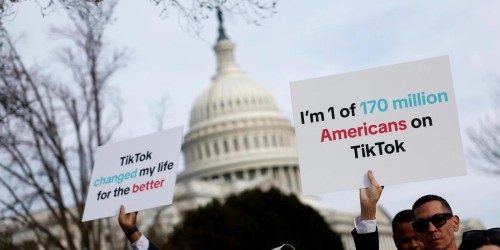
TikTok, a short video app that has taken the world by storm, is facing a ban in the United States. This decision is not simply due to a single factor, but involves complex considerations on multiple levels, including politics, economics, and culture. From the perspective of the U.S. government, the existence of TikTok has brought about all kinds of uncertainty, which makes us have to take more decisive measures.
1. Political Factors
From a geopolitical perspective, TikTok is seen as a symbol of China's expanding influence. With China's rise in technology and culture, our government has attempted to curb the expansion of its global influence by restricting Chinese companies. tikTok's rapid growth and large user base make it a target that we must keep an eye on. The U.S. government has claimed that TikTok may be transmitting data about U.S. users to the Chinese government, but these allegations are not backed up by hard evidence. Although TikTok has made it clear that its user data is stored within the U.S. and is managed and overseen by Oracle, the government remains concerned about the way this data is stored.
a. Influencing voters
Another reason on a political level is TikTok's widespread influence among young voters. As a youth-driven platform, TikTok is able to spread information quickly and profoundly influence the values and political attitudes of the younger generation. Some of our politicians are concerned that TikTok's content may influence voters' behavior during elections and threaten their political interests.TikTok's influence is not limited to entertainment; it is able to disseminate a large amount of information in just a few seconds, and this rapid and widespread dissemination has made many politicians uneasy.
b. Culture and Ideology
In addition, TikTok's way of content dissemination makes some people feel uncomfortable. The ideological differences between the U.S. and China are obvious, and we are concerned that TikTok may become a channel for the dissemination of Chinese culture and values, which in turn may affect the core values of U.S. society. This concern is particularly evident among some conservatives, who believe that TikTok will undermine the traditional social structure and cultural values of the United States, and therefore support the blocking of TikTok to prevent its potential impact on American society.
2. Economic Factors
The rapid rise of TikTok has had a huge impact on the local American technology industry. As a successful social media platform, TikTok's short-video model and powerful algorithmic recommendations have attracted a large number of users, and advertisers have turned to the platform. This has put traditional U.S. social platforms under greater competitive pressure, especially local platforms such as Facebook and Instagram, which are threatened in terms of market share and advertising revenue.
a. Protecting the local industry
The U.S. government took the measure of blocking TikTok in order to protect local tech companies and social media platforms.The success of TikTok not only threatens the market share, but also changes the trend of global social platforms. In order to ensure U.S. leadership in the global tech sector, our government chose to take measures to block TikTok in order to slow down the expansion of TikTok in the U.S. market.
b. Technology Competition
TikTok's parent company, ByteDance, has also sparked concerns among U.S. tech companies with its dominance in technological innovation. ByteDance's algorithms and technological prowess are so powerful that its innovations have not only changed the landscape of the short-video industry, but have also put pressure on U.S.-based companies. In order to prevent ByteDance's technology from continuing to seize market share, the U.S. government chose to adopt the strategy of blocking TikTok to avoid further increasing competitive pressure on local companies.
3.Cultural factors
There are certain differences between the cultural characteristics of TikTok and the mainstream culture of the U.S., which is also an important reason for banning TikTok.The content on the TikTok platform is extremely diverse and involves a variety of cultural elements and creative expressions, which has given it a huge global audience. However, this globalized and diversified way of cultural dissemination, especially some of its values and behaviors, clashes with the traditional cultural concepts advocated by some conservatives in the United States.
a. Influence on youth
Conservatives in the U.S. are especially worried about the impact of TikTok on teenagers. They believe that some of the contents on TikTok may cause teenagers to become addicted to the Internet, affecting their studies and physical and mental health. What's more, some of the cultural expressions and creative content may challenge U.S. social norms and values, which makes some people uneasy. In order to protect the physical and mental health of teenagers and prevent the platform's content from negatively affecting them, blocking TikTok has become a more direct measure.
b. Political and social norms
At the same time, the way TikTok's content is distributed may challenge social norms and values in the United States. The platform is filled with a wide variety of cultural manifestations and creative expressions, and while this content is warmly welcomed by young people, it may be seen by some as undermining the traditional framework of American society. This cultural collision has made some traditional forces in American society uneasy, believing that TikTok represents a cultural trend that is inconsistent with core American values.
4. Data Security Concerns
The U.S. government has been strongly vocal about TikTok's problems with data security, particularly concerns that TikTok may be collecting and transmitting users' personal information to the Chinese government. Although TikTok has taken steps to make it clear that the data of U.S. users is stored on U.S. soil and managed by Oracle in the U.S., the U.S. government remains skeptical about the flow of this data. Regardless of the measures taken by TikTok, the government's bias against Chinese companies still exists, which is a contributing factor to the blocking decision.
5. Control of Public Opinion and Information Dissemination
TikTok's rapid rise has made it an important platform for information dissemination. Users can freely share opinions and information on the platform, and this freedom of expression, especially the platform's ability to spread rapidly, poses a considerable challenge to the government and some vested interests. The U.S. government wants to be able to control the spread of information in order to maintain social stability and national interests. And the existence of TikTok, especially its role in information dissemination and opinion formation, challenges this goal. Therefore, the government hopes to limit its influence in information dissemination by blocking TikTok.
6. Domestic Political Gaming
Domestic political gaming in the United States has also played a role in the blocking of TikTok. Disagreements between different political factions on this issue have also influenced the direction of the blocking decision. Some political forces may use the blocking of TikTok as a political tool to garner voter support or to attack opponents. At the same time, some business interests may support the blocking of TikTok for reasons of competition with TikTok, thereby reducing the threat to their own interests.
The U.S. decision to block TikTok was motivated by a combination of factors. The decision not only reflects our concerns about national security, economic interests, cultural impact and data privacy, but also involves multiple factors of global tech competition and domestic political games.The blocking of TikTok undoubtedly poses a huge challenge to it as well as to ByteDance, and has far-reaching implications for the future development of the global tech industry and social media platforms. In this era of globalization, technological competition and cultural exchanges have become increasingly frequent, and the games between countries have become more complex. We need to look at these issues rationally and avoid affecting normal business and cultural exchanges due to political factors.
Advertisement
Advertisement
 1
1 1
1Advertisement
OTHER NEWS

What Is the Optimal Size of A Network?
BY Evelyn
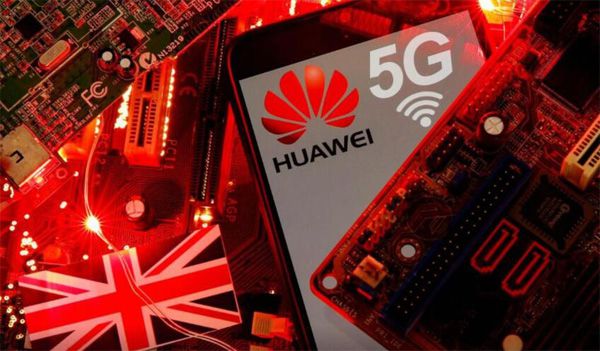
UK Government to ban Installation of Huawei’s 5G Network
BY Watson
Human body temperature generally decreasing due to unknown reasons
BY Carol

Why We Get Goosebumps?
BY Roberts

Alan Turing: Stolen Relics to be Returned After 36 Years
BY Jose
Earwax can be a good indicator of how stressed a person is
BY Joyce
RECENT NEWS
-
Why did the US decide to block TikTok?
-
PUBG Mobile Esports Generated 200 Million Hours of Viewing in 2020
-
Mario Kart Tour Races to $200M revenue and 200M Downloads
-
Game Acquisitions Expand Globally in Q1 2021 with 280 Deals Worth $39 Billion Surpassing That in 2020
-
Free Fire Shows Strong Momentum, with Its Revenue Overtaking PUBG Mobile in a Single Market for Q1 2021
-
The Games Fund Launched a $50 Million Early Investment Fund to Invest in American and European Companies