
How to Convert Sea Water into Fresh Water
Advertisement
Sustainable Low Energy Consumption Nano Wood Membrane
The research team decided to use sustainable, lower-cost materials to make the distillation membrane, and finally selected American basswood . The production process is as follows:
Cut the wood chips into 2 mm thick and boil them in boiling water for 12 hours;
Rinse three times with hot distilled water to remove impurities on the wood chips;
Put the wood chips into the boiled bleach solution until the wood turns white to remove the lignin;
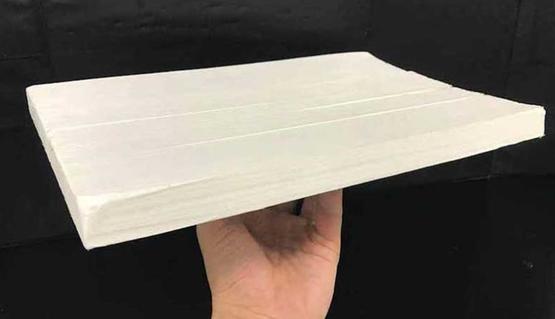
The lignin-removing wood chips are washed and dried in cold water to preserve their nano-porous structure. Eventually, they came up with a colorless, ultralight-like styrofoam material. The material can also be used for insulation and cooling.
Nevertheless, wood itself has strong hydrophilicity, which is obviously not suitable for use as a seawater filtration membrane. Therefore, the researchers intend to use silane to chemically react with the abundant hydroxyl functional groups on the surface of the material to change the hydrophilicity of the wooden surface and make the material hydrophobic. At the same time, the arrangement of cellulose fibers is retained, allowing heat to be conducted along the surface of the material, but the holes formed between the fibers make it impossible for heat to penetrate the material.
Advertisement
The researchers heated one side of the filter membrane made of this material so that the water flowing through the side of the membrane would quickly evaporate. It takes much less energy to make water vapor in this way than it does to boil water to make water vapor. In addition, this kind of film has more holes than commercial plastic films, making water vapor more permeable.
However, each square meter of membrane can only filter about 20 kilograms of water per hour, which is about half the efficiency of commercial plastic membranes. Overall, it is not as effective as expected.
The problem, the team wrote after investigating, is that the resulting film is thicker and has smaller pores than expected. Changing to other wood with better pore size and making a thinner membrane should solve this problem. They also plan to make membranes that are more durable under high temperature and harsh chemical conditions.
Water shortage is a major problem worldwide. Desalination of seawater is an important solution for mankind to solve this problem. In order to achieve this goal, people need to constantly find better ways. Although the current experimental results are still not satisfactory, the researchers are full of confidence. It is hoped that in the near future, nano-wood membranes are expected to replace plastic filter membranes, desalinating seawater more efficiently and environmentally, for the benefit of mankind.
Advertisement
 1
1 1
1Advertisement
OTHER NEWS
The Brightest Fluorescent Materials Ever Made
BY Taylor

Do people’s personalities change with age?
BY Donna

Walking: The Best Exercise
BY Irene

A Sewing Pin Found in a Teenager’s Heart
BY Frances

Can Blue Light Filter Improve Sleep Quality?
BY Janice

How can we set and remember easy-to-remember but hard-to-guess passwords?
BY Katherine
RECENT NEWS
-

Santander World Elite™ Mastercard®: The Perfect Travel Companion
-

The Buy Now Pay Later Space Is Getting More Competitive in Europe, As New Startups Sprout Up
-

Argentina Mourned Over Maradona’s Death for Three Days, Why a Football Player Could Own Such an Honor? (II)
-

Argentina Mourned Over Maradona’s Death for Three Days, Why a Football Player Could Own Such an Honor? (I)
-

007’s File Was Actually Hidden in Poland
-

A Small Town Named Fucking in Austria